


 BOOK YOUR CONSULTATION


8 weeks post op

8 weeks post op

8 weeks post op
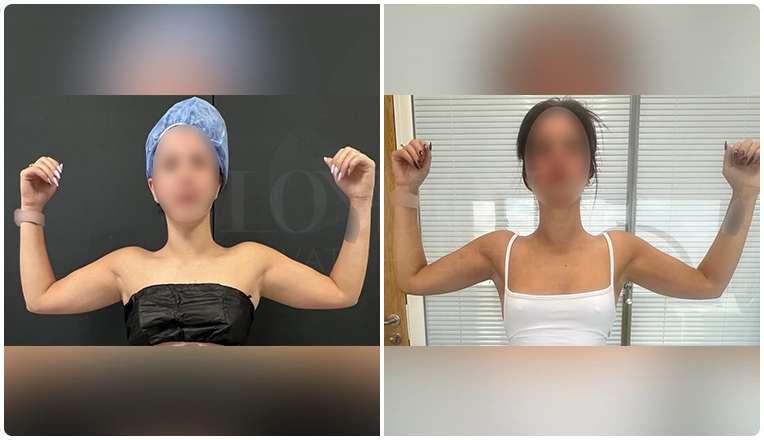
10 weeks post op

10 weeks post op
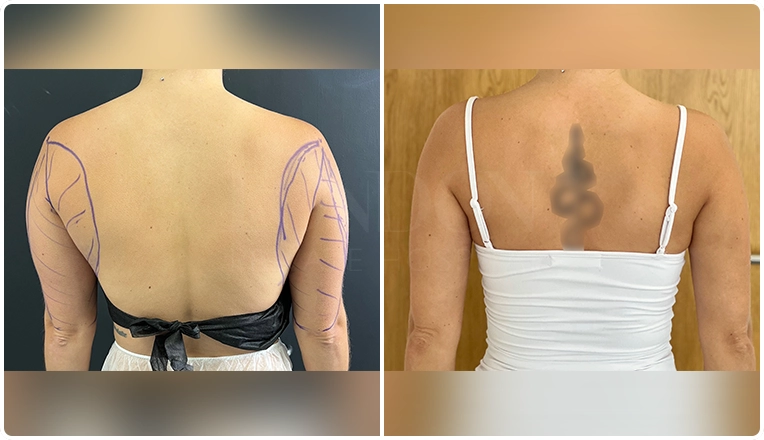
10 weeks post op

Medically reviewed by Dr Kam Singh Bsc(Hons), MRCGP, MBCAM
Medical Advisory Committee for London Private Hospital
Last Reviewed July 30th 2026
Lipoedema can affect the arms as well as the legs. Some people notice disproportionate fullness around both upper arms, while others are more concerned about tenderness, heaviness, easy bruising or tissue that changes less than expected after weight loss.
These changes can be difficult to interpret. Larger upper arms do not necessarily mean that someone has lipoedema, and similar concerns may be caused by ordinary fat distribution, loose skin, lymphatic conditions, fluid retention or other health factors.
Arm involvement may occur alongside symptoms in the legs, although the severity can differ between body areas. Some people may notice changes around the shoulders and upper arms, while others have fullness extending towards the elbows or forearms.
A professional clinical assessment is needed to understand the likely cause and whether treatment may be appropriate. London Private Hospital offers a private consultation pathway for patients concerned about possible lipoedema affecting the arms.
Lipoedema affecting the arms may cause disproportionate fat accumulation on both sides of the upper body. It primarily affects women and can extend from the shoulder towards the elbow or, in some cases, into the forearm.
The arms are often affected in a broadly symmetrical way, although they may not look or feel exactly the same. The hands are commonly less involved, but this pattern varies and cannot confirm the condition by itself.
Some people with lipedema arms notice mild disproportion without significant discomfort. Others experience tenderness, aching, heaviness, easy bruising or difficulty finding sleeves that fit comfortably.
Weight loss may reduce ordinary body fat without creating an equivalent change in the affected arms. This does not mean that nutrition or exercise are unhelpful. Both remain important for general health, weight management and preparation for any treatment.
No. Larger upper arms do not automatically indicate lipoedema.
Arm size and shape may be influenced by:
A clinical assessment considers the distribution of tissue, symptoms, medical history, skin quality and whether other areas of the body are affected.
Lipoedema commonly affects both arms, although one side may appear slightly larger or feel more tender.
Sudden swelling, redness, warmth or pain affecting one arm should not be assumed to be lipoedema. These symptoms require appropriate medical assessment, particularly if they appear unexpectedly.
Symptoms can vary considerably and may develop gradually. Possible features of lipoedema in the arms include:
Some people are primarily concerned about discomfort, while others notice changes in proportion or clothing fit.
These features can also occur for other reasons. Experiencing one or more possible signs does not confirm lipoedema, and an individual assessment is required.
Early signs can be subtle. A person may notice mild upper-arm fullness, tenderness when the tissue is touched or bruising that seems to happen easily.
Other possible early changes include:
These features may also be caused by ordinary body shape, weight-related fat or skin laxity. Early-stage arm lipoedema cannot be confirmed from photographs or a symptom checklist alone.
Some people experience tenderness, aching, heaviness or sensitivity. Others are more concerned about arm shape or clothing fit and have little discomfort.
Symptoms may differ between the upper arms, elbows and forearms. Surgery cannot guarantee that pain or heaviness will disappear completely.
Assessment should consider the whole upper limb rather than focusing only on the fullest area.
The upper arms are commonly the most noticeable area. Fullness may affect the front, back or outer arm and can extend downwards from the shoulder.
This may influence:
Some people notice fullness around or immediately above the elbows. This may reduce the natural definition between the upper arm and forearm.
Isolated elbow fat does not confirm lipoedema. The surrounding arm areas, symptoms and overall distribution should also be assessed.
Lipoedema may extend into the forearms in some patients, although patterns differ.
The assessment should consider whether the fullness is symmetrical, whether tenderness or bruising is present and how the forearms relate to the upper arms and wrists.
The hands may be less affected in a typical presentation, sometimes creating a noticeable transition near the wrists.
This is not a definitive diagnostic sign. Swelling involving the hands may suggest another or additional condition and should be assessed clinically.
Lipoedema and ordinary upper-arm fat can appear similar. Broad differences may include:
| Possible lipoedema characteristics | Ordinary upper-arm fat |
|---|---|
| Often affects both arms symmetrically | Distribution may be less even |
| Tenderness or aching may occur | Usually not painful when touched |
| Easy bruising may be reported | Bruising is less closely associated |
| Arms may remain disproportionate after weight loss | Usually reduces alongside overall body fat |
| A transition near the wrist may be noticeable | Distribution generally follows ordinary body-fat patterns |
These are general observations rather than diagnostic rules.
No photograph, online quiz, symptom list or pinch test can confirm whether someone has lipoedema.
A private assessment should look beyond arm size and consider symptoms, medical history and the distribution of tissue.
It may include:
Photographs may support an initial discussion, but they cannot show tenderness, tissue texture, medical history or the underlying cause of swelling.
Lighting, posture and camera angle may also change how the arms appear. An in-person clinical assessment is needed before treatment can be recommended.
There is no single home test, online questionnaire or pinch test that can confirm lipoedema.
Assessment is usually based on clinical history, symptoms and physical examination. Further investigation may sometimes be recommended to exclude another cause of swelling, pain or enlargement.
Possible alternative explanations include:
Some people may have more than one concern at the same time. Treatment differs depending on the cause, making a clinical assessment important.
Lipoedema can affect both the upper and lower limbs. The arms and legs may not be affected to the same extent, and symptoms can be more noticeable in one area.
Where several areas are involved, they should be considered as part of the same overall assessment. This does not necessarily mean that the arms and legs should be treated at the same time.
Separate or staged procedures may be recommended depending on:
For more detail on how the condition may affect the thighs, knees, calves and ankles, read about lipoedema symptoms and treatment in the legs, including assessment, conservative care and liposuction for suitable patients.
Conservative measures may help manage symptoms and support general health, although they do not necessarily remove lipoedema-related fat.
Possible approaches include:
Healthy eating and regular activity support strength, movement, cardiovascular health and weight management.
Affected arm fat may not reduce in the same way as ordinary fat, but this does not make lifestyle management unimportant. Reducing additional body fat and maintaining good general health may also support treatment planning and recovery.
Compression sleeves may help some people manage heaviness, discomfort or associated swelling.
They do not remove the underlying fat. Garment style, fit and compression level should be selected with advice from an appropriate professional.
The right lipedema arms treatment depends on the symptoms, areas affected, general health, skin quality, amount of loose skin and whether the legs are also involved.
For some people, treatment focuses on compression, movement, skin care and symptom support. Clinically suitable patients may also consider specialist liposuction after discussing the risks, limitations and expected recovery.
To explore the wider care pathway, read about our lipoedema treatment and liposuction options in London, including assessment, conservative management and surgical treatment for suitable patients.
Specialist liposuction may be considered for suitable patients with disproportionate lipoedema-related fat affecting the arms.
Planning differs from routine cosmetic arm liposuction because the clinician must consider:
Liposuction removes targeted fat but does not reliably remove or tighten substantial loose skin. It should not be described as a cure, and tenderness, heaviness or functional concerns may not disappear completely.
Depending on assessment and clinical suitability, treatment may include:
Treating a small isolated area may create an uneven transition. The whole arm should be assessed before deciding which areas to include.
This depends on the extent of treatment, amount of fat, general health, anaesthetic requirements and recovery needs.
Some patients may require separate or staged procedures. Combined treatment should only be considered where it is clinically appropriate and safe
Skin quality is an important part of treatment planning because the arms may respond differently after fat removal.
The likely result may be affected by:
Liposuction removes fat but cannot reliably tighten significant loose skin. Where laxity is the main concern, another procedure may be discussed if it is clinically offered and appropriate.
Some skin contraction may occur as healing progresses, but the degree varies and cannot be guaranteed.
During consultation, the clinician should explain the risk of residual laxity based on your skin quality and treatment plan.
Suitability considerations may include:
Treatment may not be advised where another condition better explains the symptoms, relevant medical conditions are not controlled, an infection is present, loose skin is the main concern or the risks outweigh the expected benefit.
A typical pathway may include:
1. Private consultation and assessment
2. Review of symptoms and medical history
3. Examination of the arms, wrists, hands and skin quality
4. Discussion of alternatives, risks and limitations
5. Marking of the treatment areas
6. Anaesthetic planning
7. Small incisions near the agreed areas
8. Removal of targeted fat using an appropriate technique
9. Dressings and compression sleeves where advised
10. Personalised discharge instructions
11. Follow-up appointments
Recovery depends on the treatment extent and whether another body area is treated at the same time.
Early experiences may include:
Aftercare may involve compression sleeves, wound care, gentle movement, avoiding heavy lifting and attending follow-up appointments.
There is no single recovery period for every patient.
Advice depends on the areas treated, occupation, healing progress and whether surgery is staged. Personalised guidance should be provided before treatment.
Someone with a desk-based role may have different recovery needs from a person whose work involves lifting or repetitive arm movement.
Exercise and heavy lifting should resume only after clinical approval.
Treatment may aim to improve:
Symptom improvement cannot be guaranteed.
Results develop gradually and may depend on starting anatomy, treatment areas, amount of fat removed, skin elasticity, existing loose skin, healing and weight stability.
Before-and-after photographs may show changes in upper-arm size, elbow definition, forearm proportion, skin appearance and overall contour.
They should only be used as guidance. Similar starting anatomy does not guarantee the same result, and images cannot demonstrate tenderness, comfort or functional change.
View our arm lipoedema liposuction before and after photos to see examples of changes in upper-arm shape and contour after treatment. These images are for guidance only, as individual results depend on anatomy, skin quality, treatment planning and healing.
Pricing may depend on:
A personalised quote should be provided after consultation.
Possible risks include:
Liposuction is not a guaranteed cure. Pain or heaviness may remain, loose skin may be visible and compression or conservative care may still be needed.
Patients considering treatment should receive a personalised assessment, balanced discussion of surgical and non-surgical options, clear information about risks and limitations, individual pricing and appropriate follow-up care.
Patients choose LPH for:
Disproportionate upper-arm fat, tenderness, heaviness or bruising can be difficult to interpret without professional advice.
A private consultation can help clarify possible causes, whether other areas are affected and whether conservative care or surgery may be appropriate. There is no obligation to proceed with treatment.
To discuss your symptoms and suitable next steps with the clinical team, you can book a private lipoedema consultation at London Private Hospital. Your appointment will focus on assessment, treatment options and whether surgery may be appropriate for you.
It may cause disproportionate, broadly symmetrical fat accumulation affecting both upper arms. In some people, fullness extends towards the elbows or forearms. Arm size alone does not confirm the condition, so clinical assessment is needed.
Possible symptoms include disproportion, tenderness, heaviness, easy bruising and arm fat that changes less than expected after weight loss. Similar symptoms may occur with other conditions.
Early signs may include mild upper-arm fullness, tenderness, easy bruising, sleeve tightness or disproportion between the arms and torso. These features are not diagnostic by themselves.
It usually affects both arms in a broadly symmetrical pattern, although one side may appear slightly larger or feel more uncomfortable.
It may extend into the forearms in some patients. Distribution varies, and the whole upper limb should be assessed before treatment is discussed.
The hands may be less affected in a typical presentation. Swelling involving the hands can have other causes and should be assessed clinically.
Lipoedema may be associated with symmetrical disproportion, tenderness and easy bruising. Ordinary fat is generally not painful and may reduce more proportionately with weight loss. These differences cannot confirm a diagnosis.
Specialist liposuction may be considered for suitable patients after clinical assessment. It is not appropriate for everyone and should not be described as a cure.
Loose skin may remain after treatment. Skin response depends on elasticity, age, treatment extent, previous weight changes and healing. Liposuction does not reliably tighten significant laxity.
This depends on treatment extent, health, safety, anaesthetic planning and recovery needs. Separate or staged procedures may be more appropriate.


